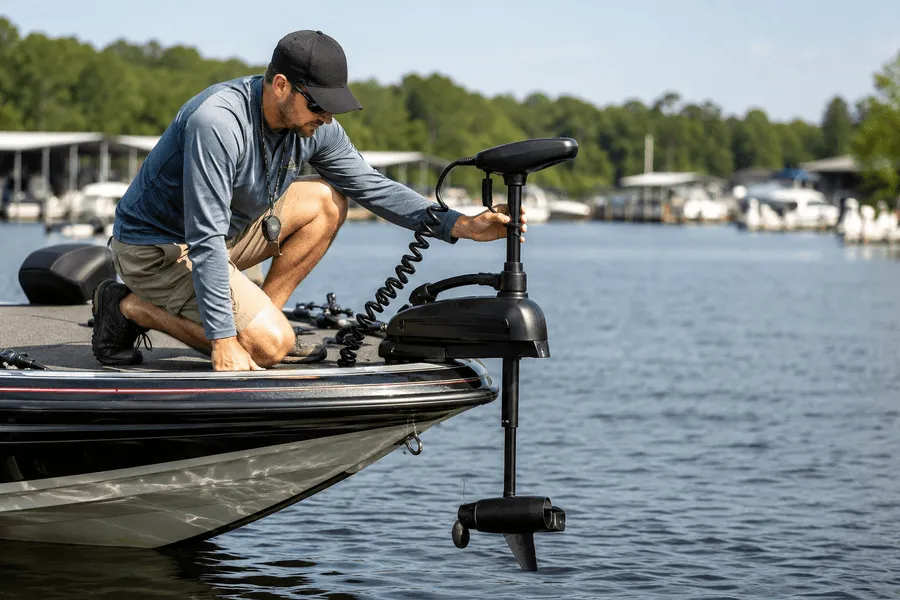
Getting blown off your favorite fishing spot because your motor lacks the power to hold you there is incredibly frustrating. You spend all that time locating the fish, only for the wind to push you right past them. On the flip side, buying a motor that is way too big for your rig drains your wallet and adds unnecessary weight to the bow. Finding the exact sweet spot for your boat is the key to a great day on the water. Welcome to your ultimate trolling motor thrust guide.
We are going to break down exactly how to calculate the power you need, how voltage plays into the equation, and why things like wind and river currents change the rules entirely.
The Golden Rule of Boat Weight and Thrust
Every reliable trolling motor thrust guide starts with one simple math equation. You need a minimum of 2 pounds of thrust for every 100 pounds of fully loaded boat weight.
Notice the words “fully loaded.” That does not mean the dry hull weight listed on the manufacturer’s website. When using a trolling motor thrust guide, remember that “fully loaded” means the hull, the outboard engine, fifty gallons of gas, your batteries, heavy coolers, full livewells, and the weight of you and your fishing buddies. A 1,500-pound aluminum hull quickly turns into 2,500 pounds of wet weight by the time you actually launch it off the trailer. If you base your math on the dry weight, you will be severely underpowered from day one.
Sizing Up Different Types of Boats
Different hull shapes behave differently in the water. A flat-bottom skiff does not catch the wind the same way a massive tritoon does. You have to factor in the physical profile of your boat.
How Much Thrust for Pontoon Boat Setups?
People ask us all the time about pontoon boats. Because they sit high off the water and have heavy aluminum fencing wrapping the deck, they act like a giant sail. The wind grabs them instantly. So, how much thrust for pontoon boat owners is actually enough? For a standard 20-foot to 22-foot pontoon, you should completely ignore the 12-volt motors. You want a minimum of an 80 lb thrust motor on a 24-volt system. If you regularly take six people out on a windy lake, stepping up to a 36-volt, 112 lb thrust motor is a very smart move.
Kayak Trolling Motor Thrust Needs
Fishing kayaks have exploded in popularity, and adding a motor turns them into highly efficient fishing machines. Kayak trolling motor thrust calculations still follow the 2-pound rule, but there is a catch. Kayaks hit their maximum hull speed very quickly. Putting an 80 lb thrust motor on a 12-foot kayak will not make you go any faster; it just wastes battery power and adds too much weight to the stern. A standard 12-volt motor pushing between 30 lbs and 55 lbs of thrust is absolutely perfect for almost any fishing kayak on the market.
Battery Voltage: 12V, 24V, and 36V Systems
No trolling motor thrust guide is complete without talking about voltage. The thrust rating dictates exactly how many marine batteries you have to wire into your boat.
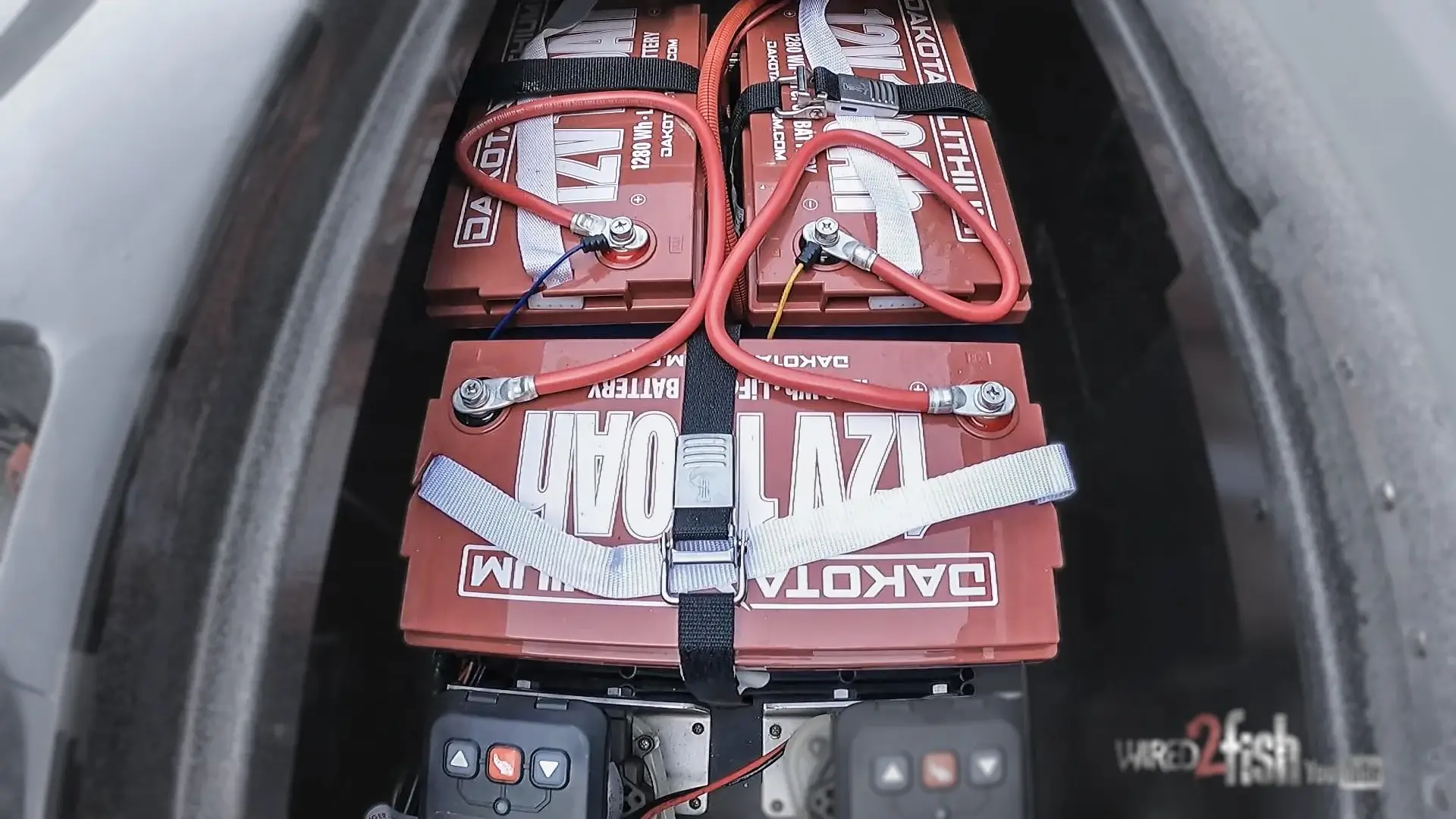
- 12-Volt Systems: Power motors up to 55 lbs of thrust. (Requires one battery).
- 24-Volt Systems: Power motors from 70 lbs up to 80 lbs of thrust. (Requires two batteries).
- 36-Volt Systems: Power motors from 100 lbs up to 112+ lbs of thrust. (Requires three batteries).
The Big Debate: 55 lb vs 80 lb Thrust Trolling Motor
This is the most common crossroads for boat owners. Trying to decide on a 55 lb vs 80 lb thrust trolling motor comes down to battery efficiency and boat size. A 12V 55 lb motor is fantastic for 14-foot to 16-foot aluminum Jon boats.
But if you step up to a 17-foot or 18-foot fiberglass bass boat, you need that 80 lb thrust system. Not just for the extra push, but for battery life. An 80 lb motor running at 50% speed uses way less battery juice than a 55 lb motor running at 100% speed just to fight the same wind. The 24-volt system gives you the staying power to fish from sunup to sundown.
Environmental Factors You Can’t Ignore
Reading a basic trolling motor thrust guide won’t prepare you for a sudden 20mph gust of wind or a heavy tidal current. The 2-pound rule assumes you are fishing in perfectly calm water, which almost never happens.
If you fish heavy river currents, coastal tides, or big open reservoirs where the wind constantly howls, you have to size up. We always tell customers referencing our trolling motor thrust guide to err on the side of more power. You don’t have to use all 112 pounds of thrust, but when the wind kicks up and you need to hold your position over a brush pile, you will be incredibly glad you have that extra power on tap.
Common Motor Sizing Problems and Anglers Solutions
Upgrading your boat’s electronics is a big deal, and guessing the right size usually leads to massive headaches on the water. Here are the issues we see every single day at the shop.
- Problem: Guessing the weight wrong. A boat owner will look at a basic trolling motor thrust chart online, match their boat length to a 55 lb motor, and completely forget about the weight of their gear and passengers. They hit the water, the wind blows, and the motor just can’t push the heavy hull.
- Solution: We help you calculate your true, fully loaded wet weight. A basic trolling motor thrust guide chart might say 55 lbs is enough, but we look at your actual fishing style and get you into the exact motor that will perform when the weather turns ugly.
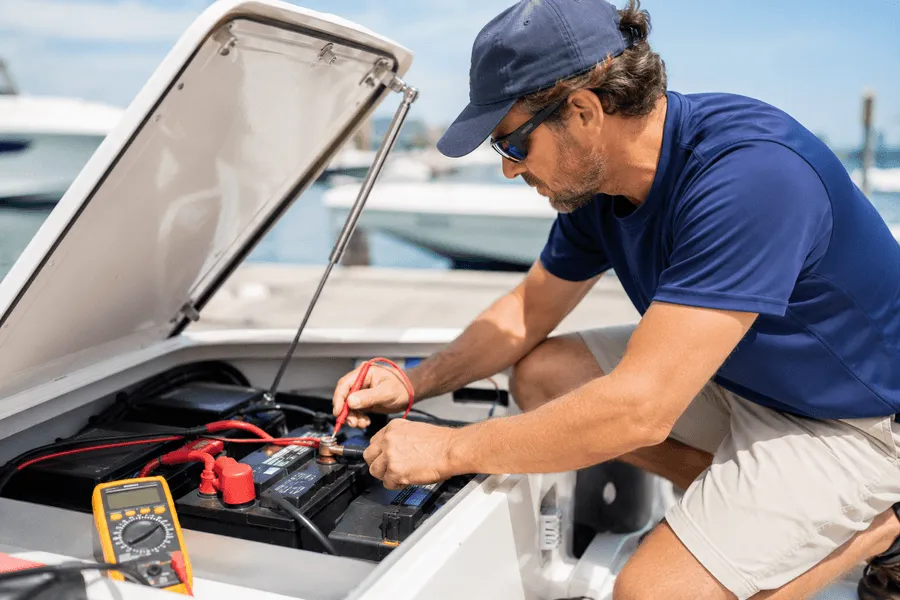
- Problem: Draining batteries by lunchtime. The biggest mistake we see when folks ignore a trolling motor thrust guide is severely underpowering their boat. If your motor is too small, you have to run it at max speed all day long. This overheats the wiring and drains standard lead-acid batteries dead by 1:00 PM.
- Solution: We match the right 24V or 36V motor to your hull and upgrade your boat with cutting-edge lithium marine batteries. Lithium gives you consistent, high-output power all day long at a fraction of the weight of traditional batteries, keeping you fishing until sunset.
Get Rigged Right with Anglers Trolling Motor Services
Keep this trolling motor thrust guide handy the next time you decide to upgrade your bow. Whether you are outfitting a lightweight kayak for weekend pond hopping or rigging a massive center console to fight heavy coastal currents, getting the power curve right changes everything about how you fish.
At Anglers Trolling Motor Services, we don’t just sell you a box and wish you luck. We specialize in custom trolling motor installations, heavy-duty motor repairs, and complete marine lithium battery upgrades. We know exactly how to balance thrust, voltage, and boat weight so your rig performs flawlessly on the water. If you are tired of getting blown off your spots, dealing with
dead batteries at noon, or struggling to figure out exactly what size motor you actually need, don’t worry about it. We have the best possible solution for all these problems.