Choosing the right trolling motor shaft length is one of the easiest details to get wrong — and one of the most expensive to fix. Too short, and your prop sucks air in every wave, killing thrust and boat control. Too long, and you’re smashing the lower unit on the bottom or wrestling an oversized shaft every time you stow and deploy. In fact, getting it right takes one tape measure, five calm minutes on the water, and a simple formula.
Why Trolling Motor Shaft Length Matters More Than Most Anglers Think
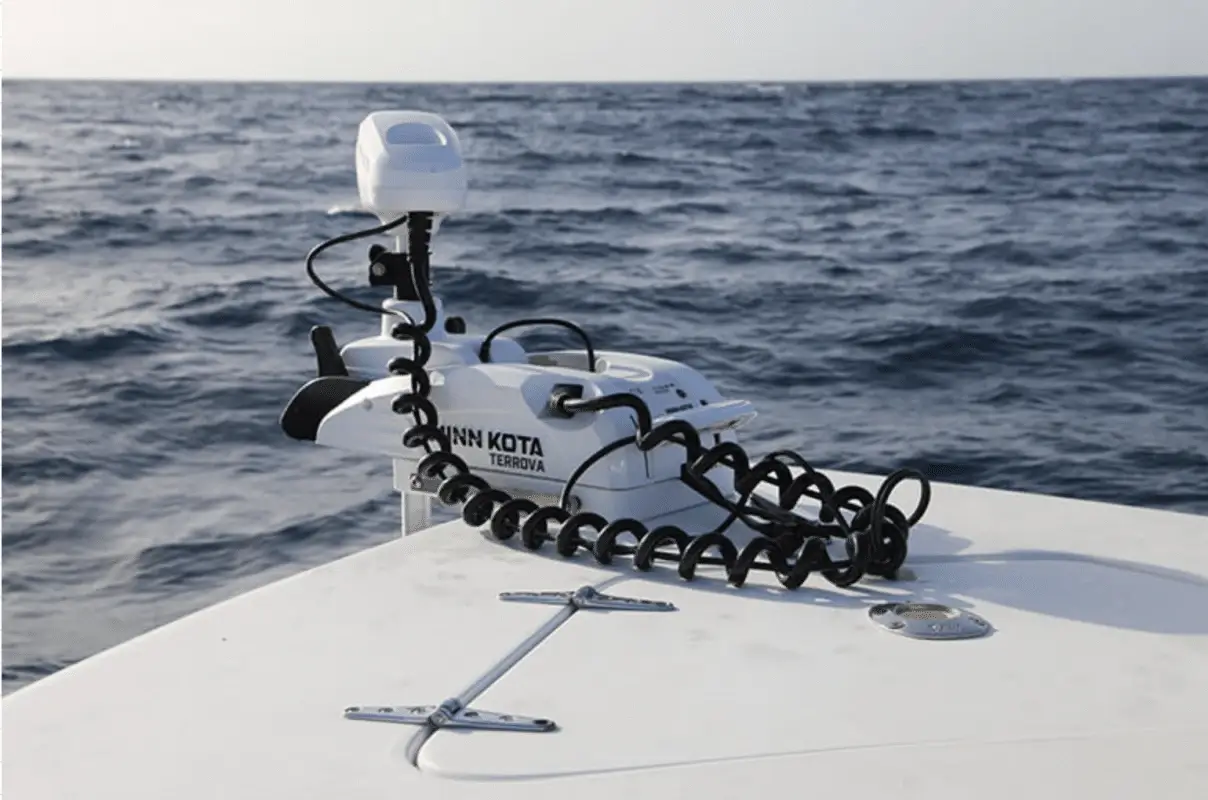
Your trolling motor’s prop needs to run roughly 12 inches below the surface to bite clean water. Shaft length is what puts it there — in other words, it’s simply the distance from the motor’s mounting bracket to the prop.
Get it wrong and you’ll feel it immediately:
- Too short: the prop breaks the surface in chop, pulling air down into the blades. This is called ventilation (often mislabeled cavitation), and it causes vibration, noise, and a sudden loss of thrust right when you need control most.
- Too long: the shaft and prop hang deeper than necessary, making shallow-water strikes, dock scrapes, and stump hits far more likely — the kind of damage that ends with a trip to a trolling motor repair shop.
Shaft length doesn’t change how much thrust your motor makes — that’s a separate decision covered in our guide on how to choose the right trolling motor thrust for your boat size — but it decides whether that thrust actually reaches the water.
The Simple Formula: How to Measure Trolling Motor Shaft Length
Forget guessing by boat length. The correct method measures your boat, because bow height varies wildly between hulls. Here’s the industry-standard process:
- First, launch on a calm day, with the boat loaded the way you normally fish — gear, fuel, and passengers. Weight changes your waterline.
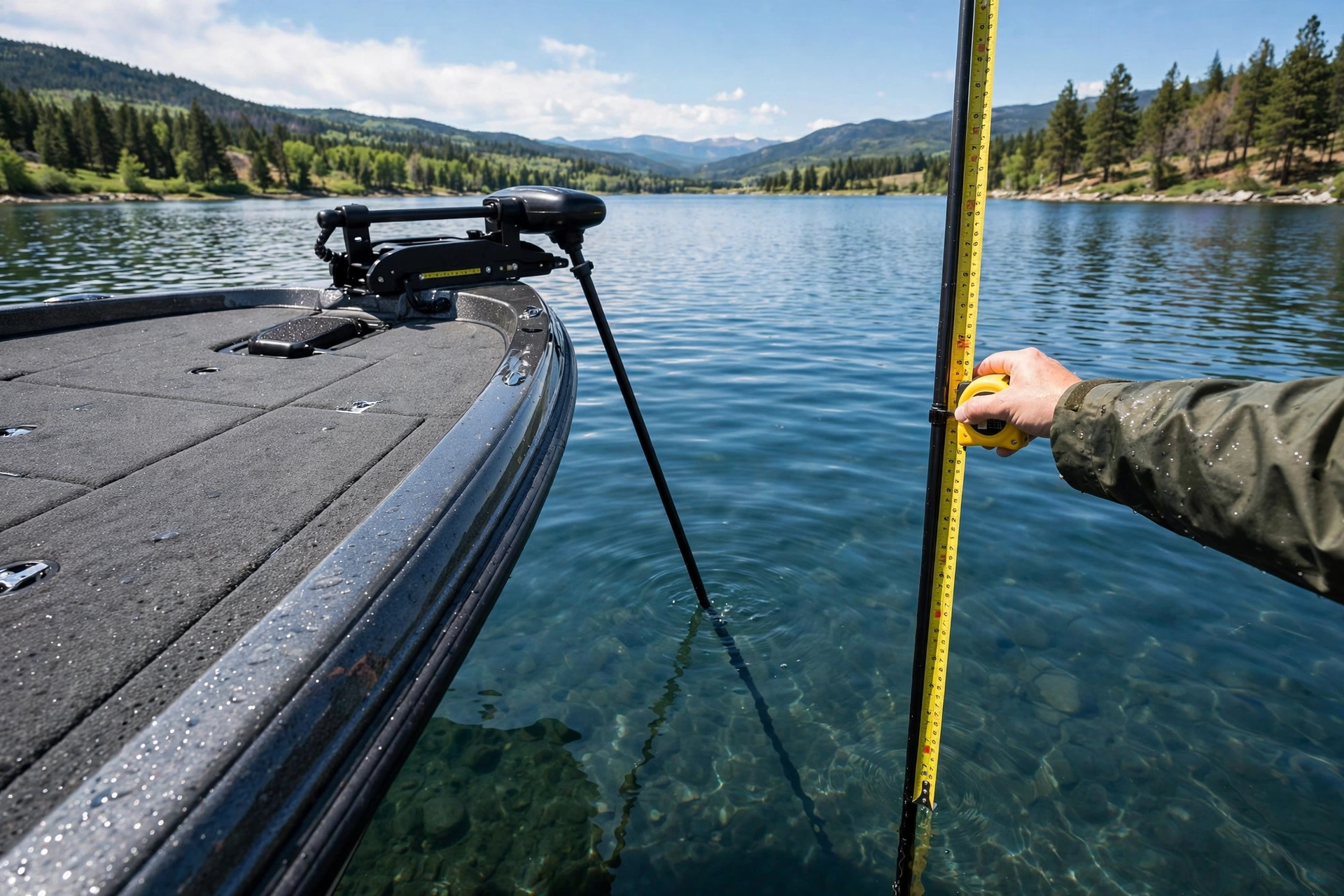
- Next, measure from the bow mounting surface (where the motor bracket will sit) straight down to the waterline. Write this number down.
- Then add 20 inches. That’s your ideal shaft length.
- Finally, round up to the nearest available shaft size (36″, 45″, 52″, 60″, or 72″).
Why 20 inches? Roughly 12 inches puts the prop at its ideal running depth, about 5 inches is your buffer for chop and waves lifting the bow, and the rest keeps the motor head at a comfortable working height above the deck. When in doubt between two sizes, always go longer — you can raise a long shaft in the bracket, but you can’t stretch a short one.
Trolling Motor Shaft Length Chart by Boat Type
Alternatively, if you can’t get on the water to measure, this chart covers the most common setups:
| Boat type | Typical bow height | Recommended shaft |
|---|---|---|
| Bass boat (16–19 ft) | Low | 45″ |
| Bay / flats boat | Low–medium | 45″–52″ |
| Deep-V aluminum (17–19 ft) | Medium | 52″ |
| Center console / offshore | High | 60″–72″ |
| Pontoon boat | High deck | 52″–60″ |
| Kayak / canoe (transom mount) | Very low | 36″ or adjustable |
Pontoons deserve a special note: the deck sits high off the water and the motor typically mounts well forward, so pontoon setups almost always need a longer shaft than the boat’s length would suggest.
The Big Debate: 45-Inch vs 52-Inch Shaft
The 45″ vs 52″ choice is the most common dilemma in trolling motors, because it covers the huge middle ground of bass boats, bay boats, and multi-species rigs.
- Choose 45″ if you fish mostly calm inland lakes from a low-bowed bass boat and measured under 25 inches from mount to waterline.
- Choose 52″ if you fish big water, deal with wind chop regularly, run a higher bow, or your measurement lands anywhere near the line. The extra 7 inches is cheap insurance.
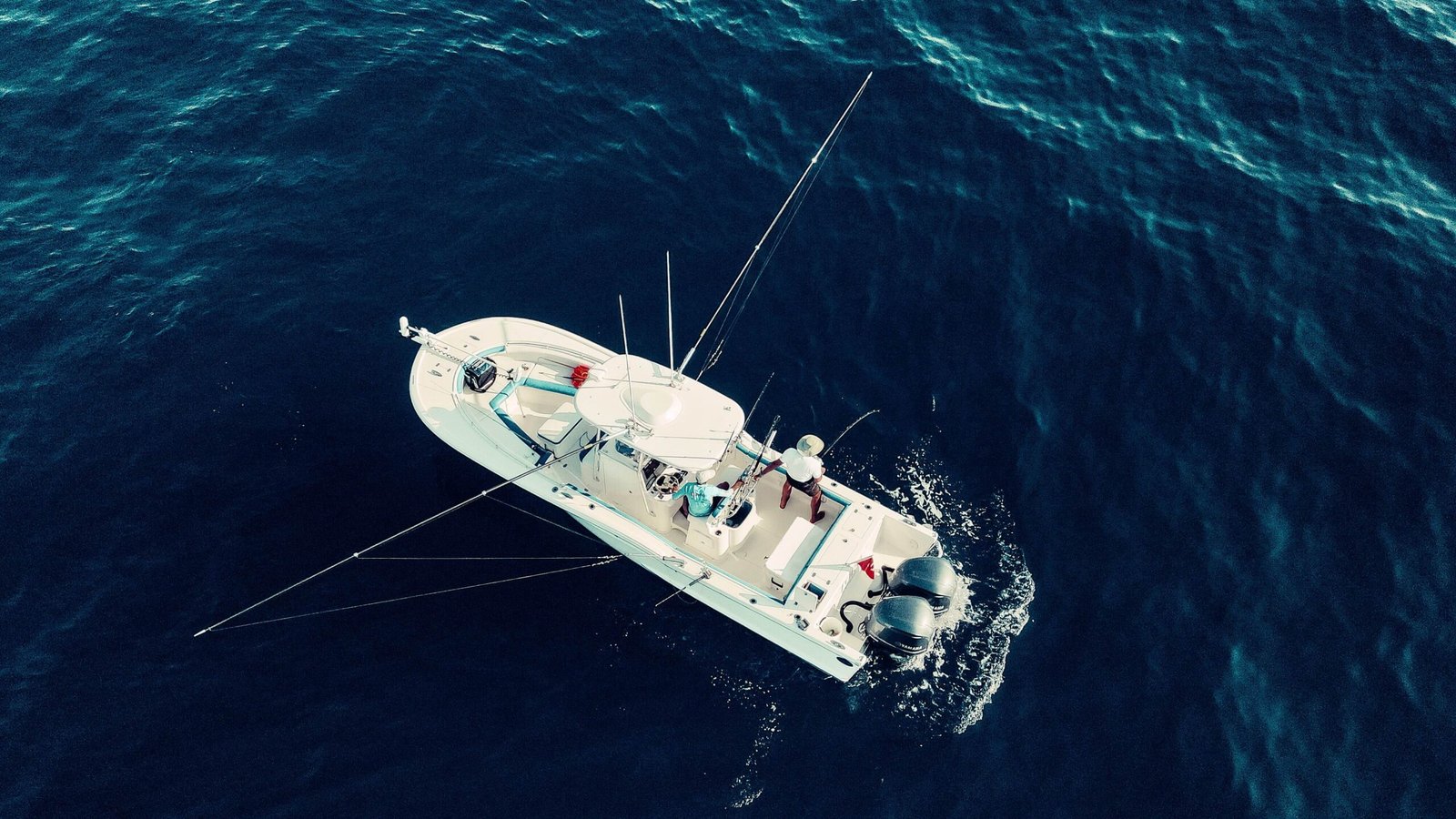
For offshore center consoles and rough-water boats, the conversation moves to 60″ and 72″ shafts — there’s no substitute for length when the bow is pitching in swells.
Bow Mount vs Transom Mount: Does Mount Style Change the Math?
The formula above is written for bow-mount motors, which is what most serious anglers run. For transom-mount motors, measure from the transom’s mounting point down to the waterline and add roughly 12 inches instead of 20, since there’s no tall bow to clear.
Still deciding between the two styles? Our breakdown of bow mount vs transom mount trolling motors walks through handling, control, and which boats suit each.
What Happens When You Guess Wrong
Ventilation and cavitation
When a too-short shaft lets the prop near the surface, it churns air into the water. As a result, you get vibration, a rattling noise, and thrust that surges and fades. Beyond the annoyance, the motor works harder for less push, which strains electrical components over time — one of the early signs your trolling motor needs professional repair.
Shallow-water damage
A too-long shaft turns every shallow flat, stump field, and boat ramp into a hazard. In short, bent shafts, chipped props, and cracked seals are the classic bill for guessing long “just in case.” Measure properly and you won’t need the extra length as a crutch.
The Detail Everyone Forgets: Stowed Length
Long shafts don’t disappear when you stow the motor. Consequently, a 60″ or 72″ shaft lying across the bow can overhang the rub rail, interfere with a boat cover, or eat into casting-deck space on smaller boats. Before committing to a long shaft, lay a tape along your bow in the stowed position and confirm the motor will sit where you need it. If the fit is tight, a quick-release bracket — fitted during professional trolling motor installation — solves most clearance headaches.
Frequently Asked Questions
What shaft length do I need for a 16-foot bass boat?
Most 16-foot bass boats run a 45-inch shaft. However, measure your bow height to confirm — if the mount-to-waterline distance plus 20 inches lands above 45, step up to 52.
Can a trolling motor shaft be too long?
Yes. An excessively long shaft increases the risk of bottom strikes in shallow water, catches on docks, and can complicate stowing. Longer is safer than shorter, but “as long as possible” isn’t the goal — measured and correct is.
How deep should a trolling motor prop be?
Aim for the center of the prop to run about 12 inches below the surface. That’s the depth the +20-inch formula is designed to deliver.
Does shaft length affect thrust?
Not directly — thrust is determined by the motor’s power rating and your boat’s weight and wind profile. But a wrong-length shaft wastes whatever thrust you have, which is why sizing thrust and shaft together matters when you shop for a trolling motor.
Should I size up for saltwater or rough water?
Yes. Waves and swell constantly change your effective bow height, so offshore and Great Lakes anglers should add extra margin — 60-inch-plus shafts are standard on center consoles for exactly this reason.
Get the Right Fit the First Time
Measuring takes five minutes, but the wrong shaft costs you seasons of frustration — or a repair bill. If you’d rather have it done right, our technicians measure, fit, and install trolling motors for Southern California boat owners every day. Contact Trolling Motor Specialists or call 714-580-1492 and we’ll make sure your motor fits your boat perfectly before it ever touches the water.