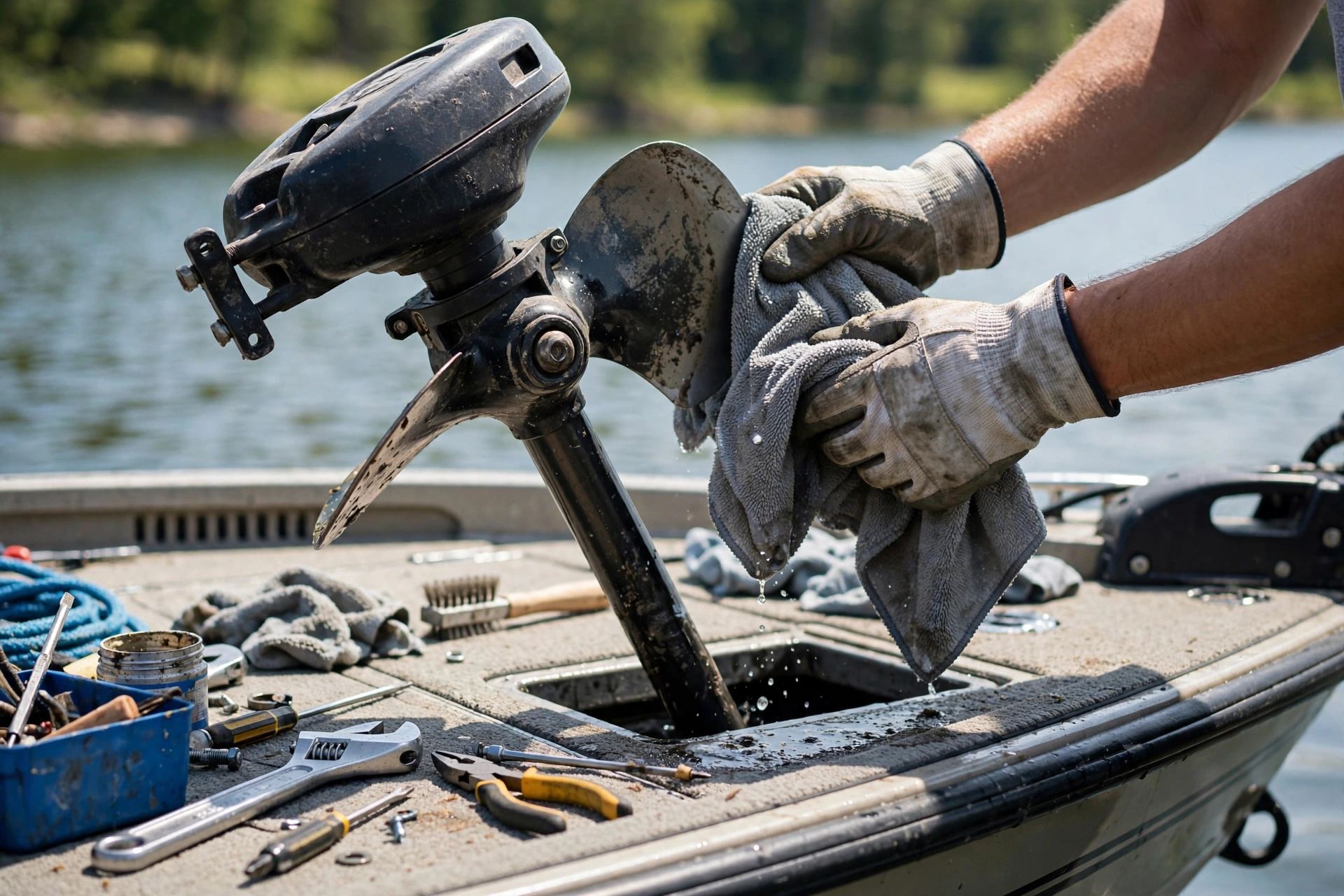
A trolling motor is a workhorse — and like any workhorse, it lasts longest with routine care. Preventive trolling motor maintenance takes minutes, costs almost nothing, and is the difference between a motor that runs a decade and one that dies in three seasons. Here’s the complete trolling motor maintenance checklist, from after-trip wipe-downs to winter storage.
After Every Trip: The 5-Minute Routine
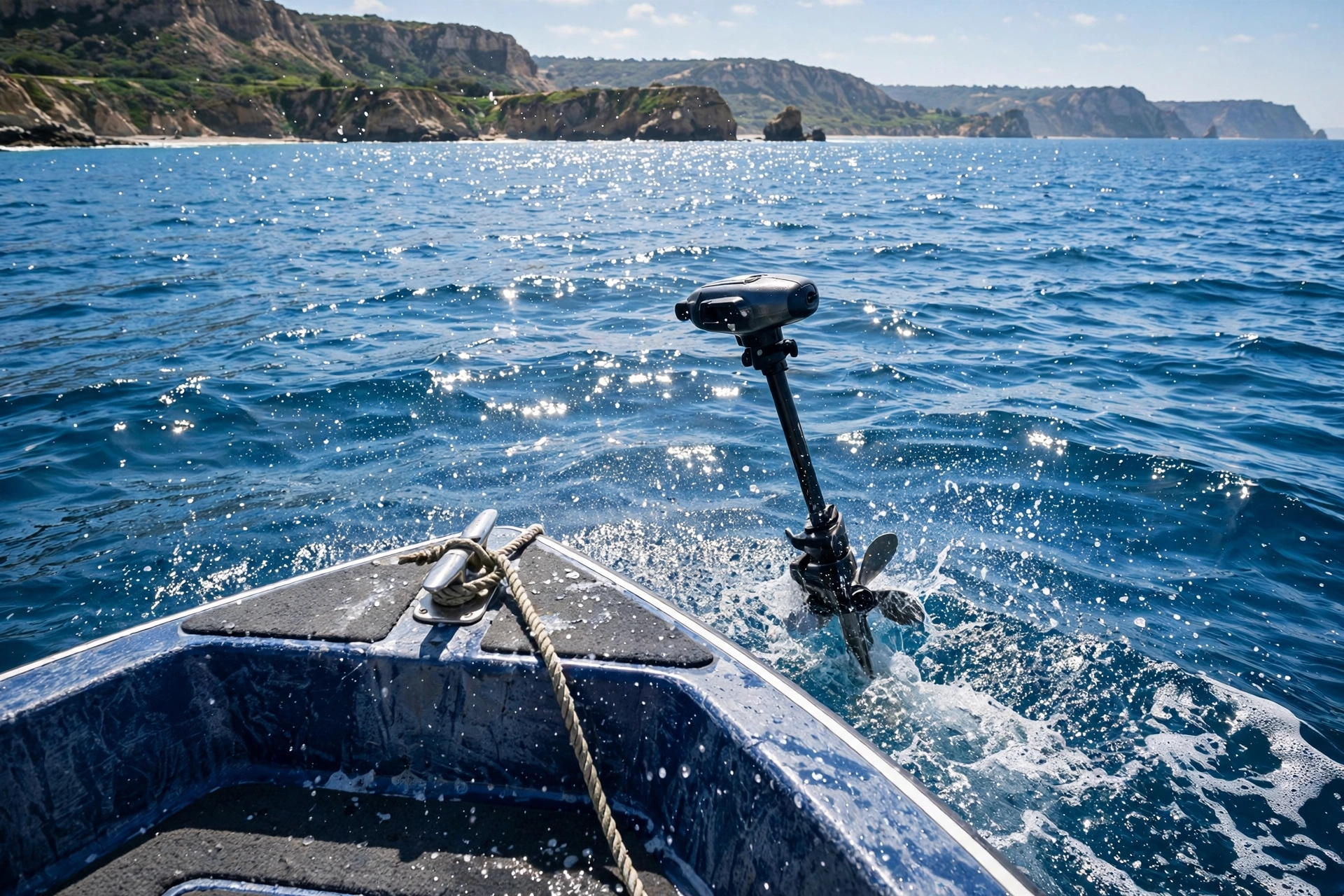
- Rinse with fresh water — the whole motor, mount, and prop. Non-negotiable after saltwater; good practice after fresh.
- Check the prop for fishing line, weeds, or debris wrapped around the shaft — line cuts into seals fast.
- Wipe down the shaft so grit doesn’t get dragged into the housing when you stow.
- Stow the motor properly — don’t trailer with it bouncing in the deployed position.
- Disconnect or switch off batteries to prevent slow parasitic drain.
Saltwater anglers: add a corrosion-inhibitor spray to metal parts — see our saltwater vs freshwater guide.
Monthly: The 20-Minute Check
- First, remove the prop and clear any line from behind it; inspect the prop for chips or bent blades.
- Next, check the prop nut and pin — replace shear pins at the first sign of wear, not after they fail.
- Then, inspect all wiring for chafing, especially where cables pass through the bow or rub the mount.
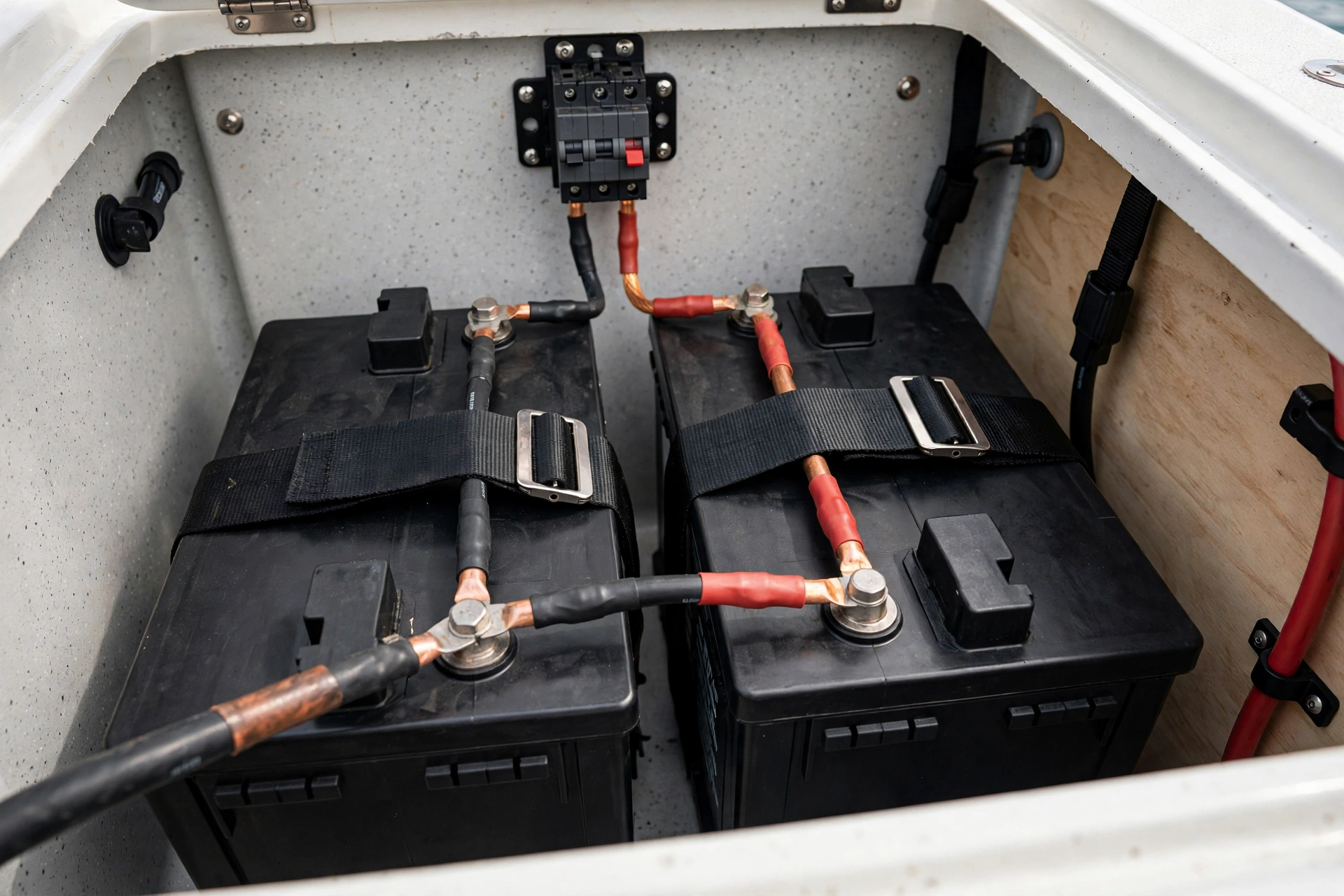
- After that, check battery terminals for corrosion; clean and coat with dielectric grease. Our marine battery maintenance guide goes deeper.
- Also, test the circuit breaker — trip and reset it to confirm it works.
- Finally, check mount bolts for tightness; vibration loosens hardware over time.
Seasonally: The Deep Service
- First, lubricate pivot points and hinges with marine grease — deploy/stow mechanisms, steering cables, and tilt tubes.
- Next, check steering cable tension on cable-steer models; adjust per the manufacturer’s spec.
- Then, inspect seals around the lower unit for nicks or weeping — water intrusion kills armatures.
- After that, load-test batteries and check water levels on flooded lead-acid types.
- Finally, verify thrust performance — weak push at full power is an early warning covered in our signs you need repair guide.
Off-Season Storage: Winterize It Right
- Fully charge batteries, then store them disconnected in a cool, dry place — top up the charge monthly.
- Clean and dry the entire motor; apply corrosion inhibitor to metal surfaces.
- Store the motor stowed and covered, out of direct sun — UV degrades plastics and wiring insulation.
- Loosen or remove the prop to relieve pressure on the seals during long storage.
Trolling Motor Maintenance Checklist (Quick Reference)
| When | Task |
|---|---|
| Every trip | Freshwater rinse, prop debris check, shaft wipe-down, proper stow |
| Monthly | Prop removal and inspection, wiring check, battery terminals, breaker test, mount bolts |
| Seasonally | Grease pivots, steering cable tension, seal inspection, battery load test |
| Storage | Full charge, disconnect batteries, corrosion inhibitor, covered storage |
When Maintenance Isn’t Enough: Call a Pro
Some jobs go beyond DIY: grinding noises from the lower unit, intermittent power loss, a motor that won’t turn, or water inside the housing all point to internal problems. Continuing to run a damaged motor turns a small repair into a replacement. Therefore, our trolling motor repair technicians diagnose and fix these issues daily — and catching them early is always cheaper.
Frequently Asked Questions
How often should I service my trolling motor?
Basic care after every trip, a deeper check monthly during the season, and a full service plus proper storage once a year. However, heavy saltwater users should double the frequency.
What grease should I use on my trolling motor?
Marine-grade waterproof grease on pivot points, hinges, and O-rings. Avoid general-purpose greases that wash out — and never use petroleum products on rubber seals.
Can I pressure-wash my trolling motor?
No — high pressure forces water past seals into the housing and electronics. Instead, a garden hose and a soft brush is all you need.
How long should a trolling motor last?
With proper preventive maintenance, 8–12 years is realistic for a quality motor. On the other hand, neglected motors — especially in saltwater — can fail in 2–3 years.
Keep Your Motor Running Like New
Do the simple stuff yourself, and let us handle the rest. Trolling Motor Specialists offers professional trolling motor repair and seasonal servicing for Southern California boat owners. Contact us or call 714-580-1492 to schedule.