
A kayak trolling motor turns a paddle-powered hull into a serious fishing machine — hands-free propulsion, precise boat control, and the range to fish water you’d never reach by paddle. However, kayak rigging has its own rules: weight, balance, waterproofing, and safety all matter more on a 12-foot hull. Here’s how to do a kayak trolling motor installation right.
Choosing the Right Trolling Motor for a Kayak
Kayaks need far less power than boats. Therefore, the sweet spot is:
- Thrust: 30–55 lbs is plenty for most fishing kayaks. More thrust just adds weight you don’t need — our thrust guide explains the math.
- Voltage: 12V systems keep things simple and light. In fact, a single battery does the job.
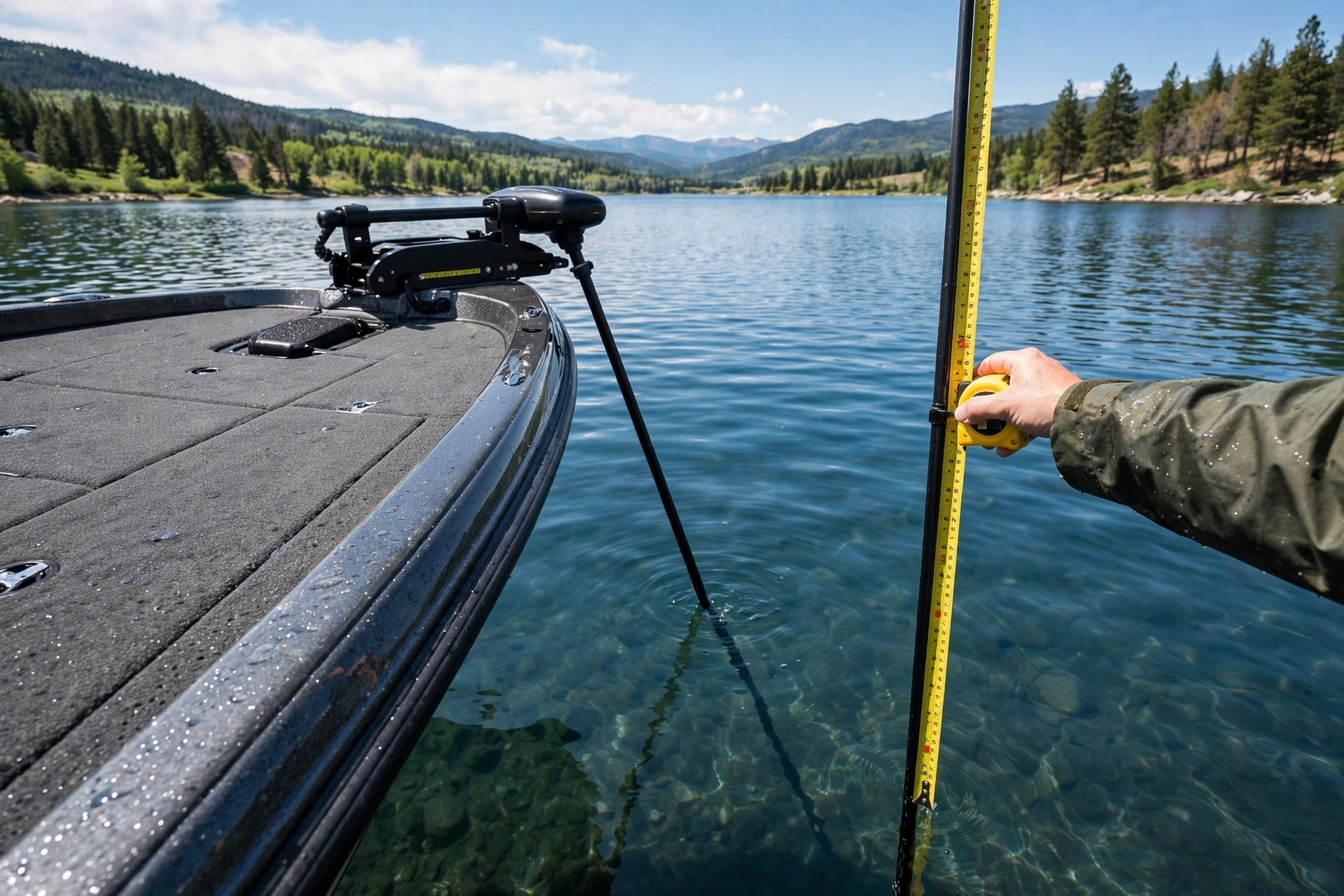
- Shaft: 36-inch or adjustable shafts suit low kayak hulls — see how to calculate shaft length.
- Control: hand-controlled transom models are simplest. On the other hand, foot or remote steering frees your hands for fishing.
Kayak Trolling Motor Mount Options
Transom / stern mount (most popular)
A transom-mount motor clamped to a stern mounting plate is the simplest, most reliable kayak setup. Many fishing kayaks have molded mounting points; otherwise a universal transom bracket works. Steering is by hand via the tiller — simple and bulletproof.
Side / gunwale mount
Side mounts position the motor amidships for better weight distribution on narrow kayaks. However, they require a sturdy mount arm and careful balancing, but keep the stern clear for landing fish.
Bow mount
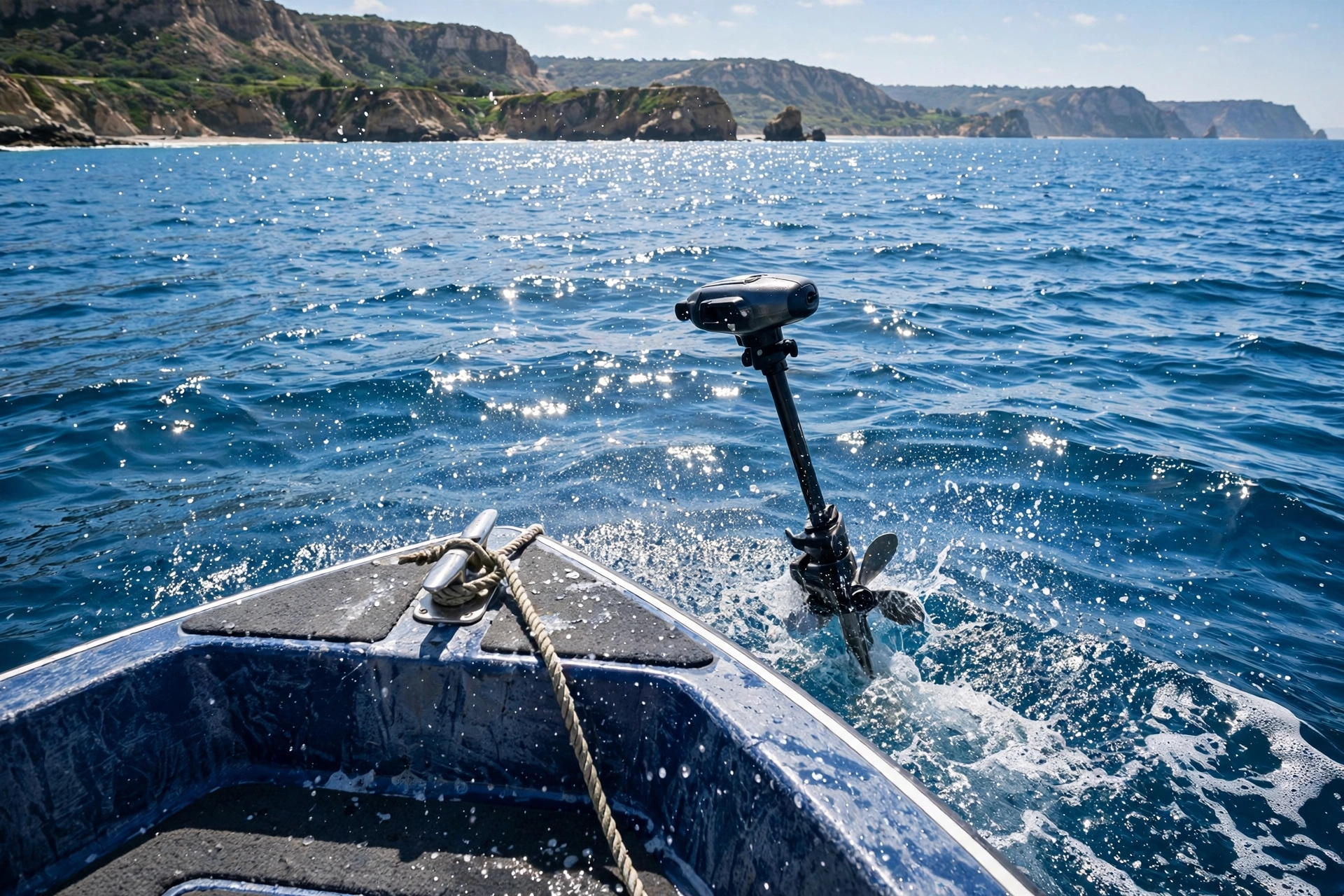
Bow-mount kayak motors with remote steering offer the best boat control — pulling rather than pushing the hull tracks straighter in wind. They cost more and need a solid bow mounting plate, but serious kayak anglers swear by them. Compare the trade-offs in our bow vs transom mount guide.
Battery Setup: Keep It Light
Weight is everything on a kayak. Therefore, your best options are:
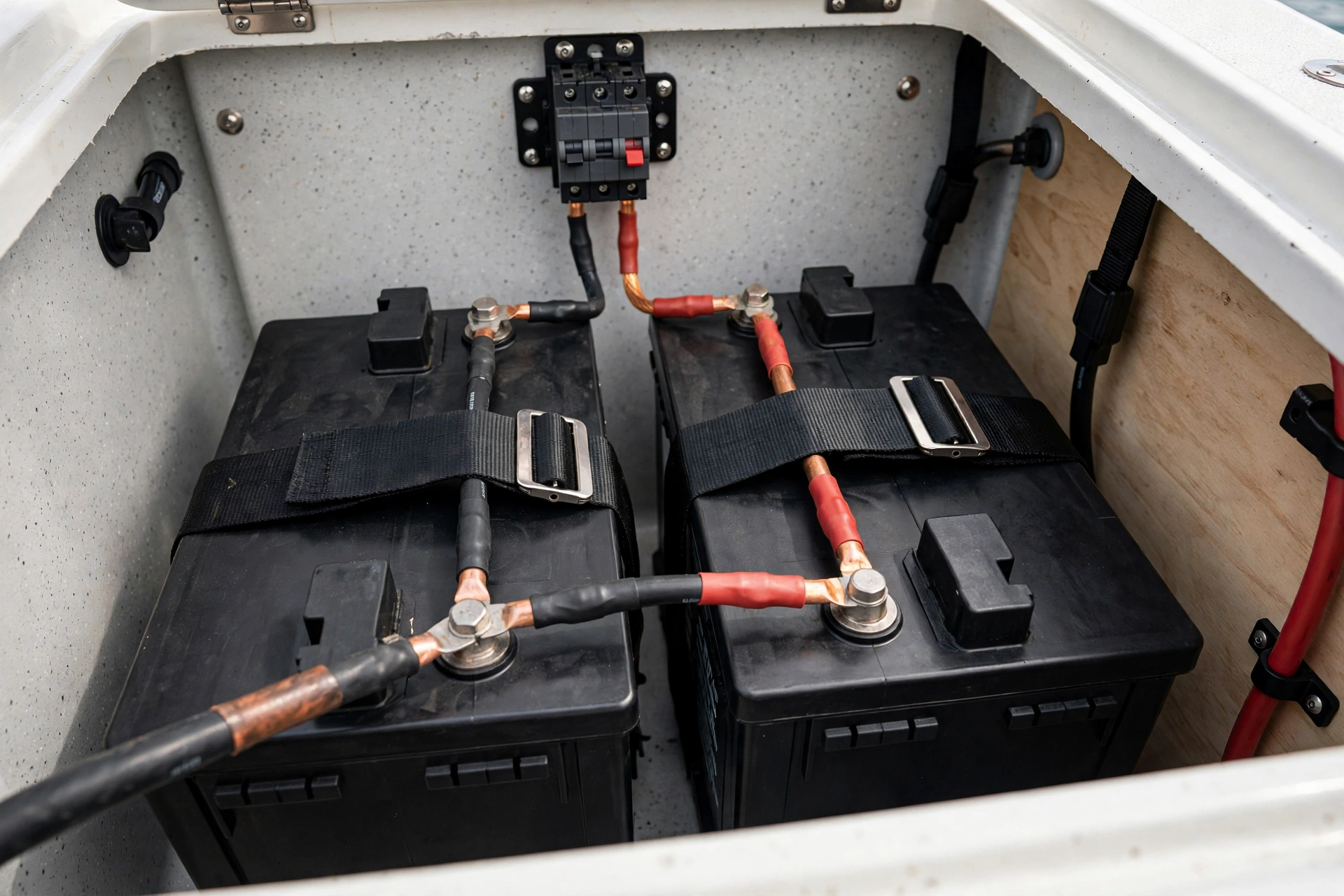
- Lithium (LiFePO4): a 12V 50Ah lithium battery weighs a fraction of a lead-acid equivalent and runs longer — the top choice for kayak anglers. See our lithium vs AGM guide and lithium battery installation service.
- Placement: center the battery low in the hull — behind the seat or in a center hatch — to keep trim balanced. Never mount it where a capsize could trap it.
- Secure it: strap the battery into a waterproof box. After all, a loose battery in a tippy kayak is a hazard.
Wiring Your Kayak Trolling Motor Safely
- First, use marine-grade tinned wire — 8 AWG is plenty for short kayak runs.
- Next, install an inline fuse or small breaker (40–50A) within inches of the battery positive terminal.
- Then, make every connection waterproof: adhesive-lined heat shrink, dielectric grease, and sealed connectors.
- After that, route wires where they can’t snag lines, nets, or your paddle — under gunwale tracks or through the hull with proper glands.
- Finally, use a quick-disconnect plug so you can separate motor and battery for transport.
For bigger boats the principles scale up — see our full 24V/36V wiring guide.
Steering Options for Motorized Kayaks
- Tiller hand control: simplest; reach back and steer. Fine for relaxed fishing.
- Foot-brace steering cables: connect the motor to foot pedals for hands-free control — popular with serious kayak anglers.
- Remote / wireless: keyfob or phone-app steering, usually paired with bow-mount motors.
Kayak Motor Registration and Legal Rules
Important: in most states, adding any motor — even electric — turns your kayak into a “motorized vessel” that must be registered, and you may need navigation lights for low-light use. Rules vary by state and by waterway, and some lakes restrict motors entirely. Therefore, check your state’s boating agency before your first launch — a ticket ruins a good day fast.
Frequently Asked Questions
What size trolling motor do I need for a kayak?
30 to 55 lbs of thrust on 12V covers virtually all fishing kayaks. So go lighter rather than heavier — excess thrust just drains the battery faster.
How long will the battery last on a kayak?
A 12V 50Ah lithium battery typically gives 4–8 hours of mixed-speed fishing, depending on wind and current. In any case, carry a paddle as backup — always.
Will a trolling motor tip my kayak?
Not if rigged right. First, center the battery low, keep the motor’s weight balanced, and test stability in shallow water before heading out. Wider fishing kayaks handle motors best.
Can I use a regular boat trolling motor on a kayak?
You can, but kayak-specific or small transom models are lighter and easier to manage. In fact, a 55-lb thrust transom motor is the practical ceiling for most kayaks.
Get Your Kayak Rigged by Pros
We rig kayak trolling motor systems — mounts, lithium batteries, and waterproof wiring — for Southern California anglers. See our installation service or contact us at 714-580-1492 to talk through your kayak setup.